

What personal care covers
Personal care is help with the things most people do every morning and night. A support worker comes to your home and works at the pace you set.
- Showering and bathing, including getting in and out safely.
- Dressing and grooming: clothes, hair, shaving and skin care.
- Toileting and continence care, done with dignity.
- Meals and eating: preparing food, and help with eating if it's needed.
- Safe transfers and mobility, like moving from bed to chair, and help with equipment for personal care and safety.
Who it's for
Adults on the NDIS who need a hand with daily routines because of disability, and families who want the person they love to stay safe and comfortable at home. It suits people who live alone, with family, or who are settling back in after a hospital stay.
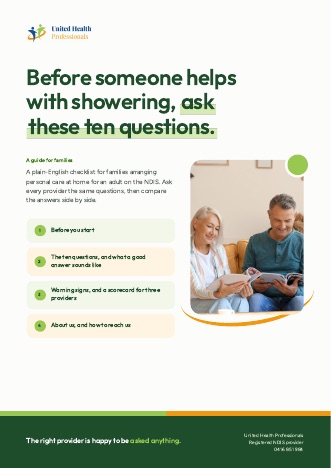
Free guide · PDF, 7 pages
The Personal Care Checklist
Ten questions to ask any provider before someone helps with showering and dressing, plus a scorecard.
Thanks, your guide is ready.
Download the PDFWe'll give you a quick call in the next day or so to see if it helped. No pressure.
How it's paid for
Personal care can be paid from your NDIS funding if it's included in your plan. It usually comes from the core supports part of the plan. Before anything starts, we go through a service agreement with you that sets out the supports, times and prices in writing.
Not sure what's in your plan? Call us on 0416 851 984 and we'll go through it with you.
Questions worth asking any provider
Before someone helps with showering or dressing, it's fair to ask:
- Can we choose a female or male worker?
- Will it be the same worker most weeks?
- What happens if our regular worker is sick?
- What checks and training do your workers have?
- Will we see every price in writing before anything starts?
The free checklist above has all ten questions, what a good answer sounds like, and a scorecard to compare up to three providers.
How to start
- Call or send an enquiryTell us who the support is for, what help is needed and where.
- Talk it throughWe go through the plan, the routine and what matters to the person.
- Meet usAt home or wherever suits, with family there if you'd like.
- Sign when you're readyA service agreement with every support and price, before anything starts.
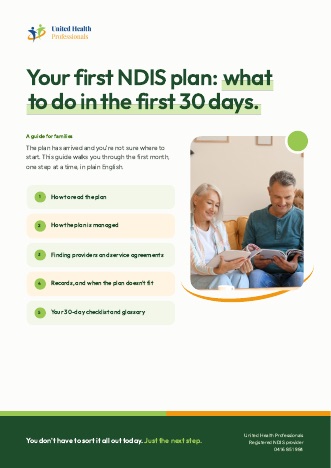
Free guide · PDF, 7 pages
Your first NDIS plan: the first 30 days
How to read the plan, choose how it's managed, compare providers and check a service agreement.
Thanks, your guide is ready.
Download the PDFWe'll give you a quick call in the next day or so to see if it helped. No pressure.